TL;DR: Yes, legitimate rewards apps exist and pay out. Use the 2-minute checklist below to spot scams. Expect pending times of 1–60 days even on real platforms. Avoid VPNs, multiple accounts, and emulators—they break tracking. First cashouts usually take 2–48 hours for validation.
Quick Definitions (60 Seconds)
Rewards app / GPT site: Platform where you complete offers, surveys, or game installs in exchange for points you can cash out as gift cards or PayPal
Offer partner (offerwall): The companies that provide the actual tasks—platforms like Freeward connect you to these partners
The 2-Minute Legitimacy Checklist
Use this checklist to evaluate any rewards platform. The first three are deal-breakers—if a platform fails these, stop immediately:
Essential:
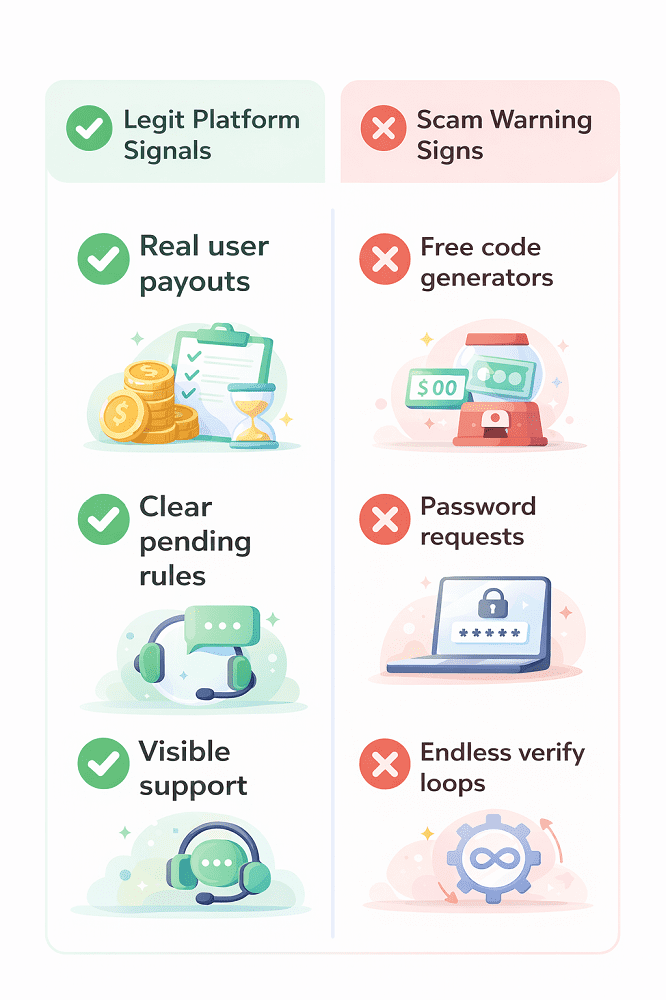
- Payout proof exists: Real users post cashout screenshots on Reddit, Discord, or the platform’s community—not just promotional images on the homepage
- Support channels are visible: : Email, help center, or contact form is easy to find—not hidden or nonexistent.
- No unrealistic promises: Claims like “earn $500 in one day” or “unlimited free gift cards” are immediate red flags
Strong indicators:
- Rules are posted publicly: Terms of service and ban reasons are clear, not vague or missing
- No generator language: Never mentions “hacks,” “free codes,” or “verify you’re human” loops
- Country expectations are clear: Platform states which regions get the most offers and what to expect if you’re elsewhere
- Payment methods match their claims: If they promise PayPal, users should actually receive PayPal payments
Why Legitimate GPT Sites Don’t Pay Instantly
“The site hasn’t paid me yet—is this a scam?”
Not necessarily. Even legitimate platforms have delays and payment holds, and understanding why helps you tell the difference between normal processing and an actual scam.
Why your withdrawal might be stuck:
First cashout validation — Most platforms hold your first withdrawal for a few hours to a few days to verify that you’re a real person and not a bot or fraudster.
This is standard practice. After your first successful cashout, future withdrawals are typically faster.
Fraud prevention checks — If something looks unusual (sudden high earnings, location mismatches, device changes), automated systems flag your account for human review. This can delay payment by several days to weeks.
You broke tracking without realizing it — Switching browsers mid-offer, clearing cookies, or using a VPN can make it impossible for the system to connect your completed task to your account. The platform didn’t get confirmation you did the work, so they can’t pay you.
The offer hasn’t been verified yet — Advertisers need time to confirm you followed instructions exactly. Some offers credit in hours, others take 30–60 days. This is disclosed in the offer terms before you start.
Normal statuses on legitimate platforms:
- “Pending” = waiting for advertiser confirmation (normal, can take days or weeks)
- “On hold” = under review for fraud prevention (normal for first cashouts or unusual activity)
- “Not credited” = tracking failed or requirements weren’t met (see troubleshooting guides below)
What to Do Next
For stuck withdrawals and missing rewards, we have detailed troubleshooting guides:
- First cashout taking too long? First Cashout Timeline
- Cashout shows “on hold”? Cashout Stuck: Pending vs On Hold
- Reward never credited? Reward Not Credited Guide
The key difference: Legitimate platforms explain these delays upfront and have support channels you can contact. Scam sites either pay no one, or only pay early users to create fake testimonials before disappearing.
Common Scam Patterns (Ignore These Instantly)
Real platforms never do these things:
- Ask for your password or account credentials: Legitimate apps never need your login for other services
- Require sketchy APK files: Safe apps are available through official app stores, not random download links
- Trap you in “verify you’re human” loops: Endless captchas or survey walls that never pay out are classic scams
- Promise “free gift card codes” or “generators”: These don’t exist—see Earn Free Robux: Legit Ways and Scams to Avoid for examples
- Ask you to pay to unlock rewards: You should never pay money to access money you already earned
Safety Rules That Prevent Most Problems
Following these rules eliminates 80% of common issues:
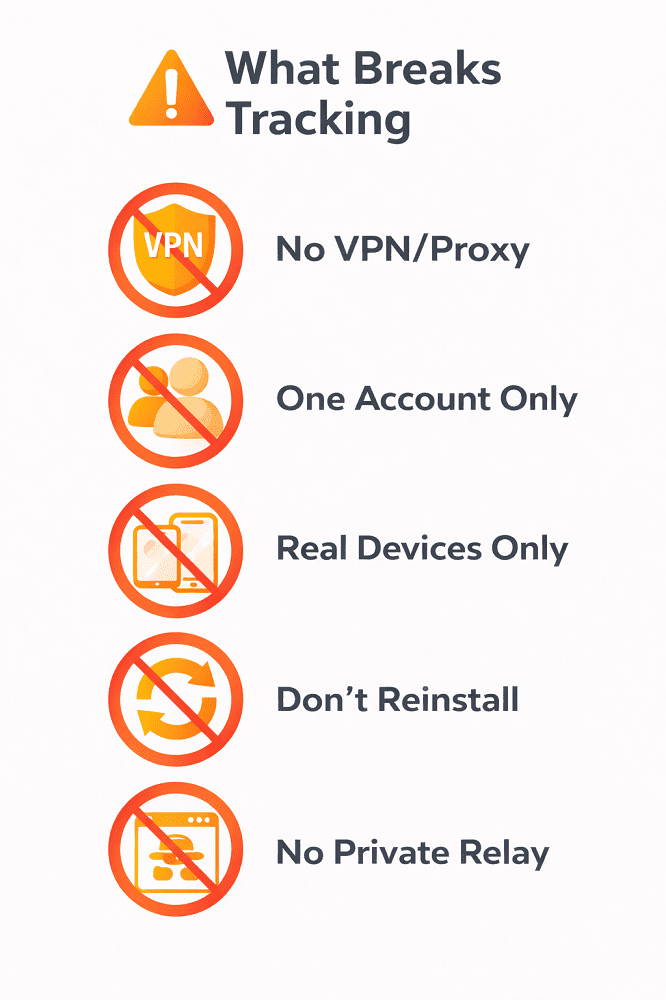
- No VPN, proxy, or Private Relay → These break tracking and can trigger fraud detection systems
- One account only → Multiple accounts will get you banned and forfeit all rewards
- No emulators → Use a real device—emulators are flagged as fraud tools
- Don’t reinstall to fix problems → Reinstalling can break tracking or make it look like you’re trying to claim the same offer twice
- Use real information → Fake names, emails, or addresses can delay or block cashouts
- Follow exact offer steps → If an offer says “reach level 10,” reaching level 9 won’t credit
For the full breakdown of what gets accounts banned and how to avoid it: Why GPT Accounts Get Banned
Country Reality Check
Rewards apps work best in the US, UK, Canada, and Australia—these regions get the most offers and fastest payouts. If you’re in Tier 2 or Tier 3 countries, you’ll see fewer offers and longer pending times.
This isn’t the platform being unfair—it reflects where advertisers spend their budgets. Some platforms are transparent about this; others aren’t.
Check regional fit: Are Rewards Apps Worth It in Your Country?
Find the best options for your region: Best Offerwalls by Country
When Rewards Apps ARE a Bad Fit
Rewards apps might not work well for you if:
- Offers are extremely limited in your region and you’d spend more time searching than earning
- You can’t avoid using VPN for privacy or security reasons (VPN breaks tracking)
- You need guaranteed income on a fixed schedule—rewards are variable and unpredictable
- You find the pending/validation process too frustrating or anxiety-inducing
For a deeper dive: Are Rewards Apps Worth It?