
Why People Even Ask This
If you’re searching “Is Freeward legit?”, you’re probably suspicious — and that’s fair.
“Free money for surveys and offers” usually sounds like a scam.
But GPT platforms aren’t scams or charities. They’re advertiser-funded systems that pay users for completing specific tasks advertisers pay for.
So the real question isn’t “is it magic?”
It’s: does it work as a real system — and is it right for you?
✅ TL;DR (Short Answer)
- Yes, Freeward is legit. It’s been operating since 2021 and pays users who follow the rules.
- No, it’s not fast or guaranteed money.
- Clean accounts usually cash out in 3–12 hours.
- Problems happen due to VPNs, multiple accounts, or offer rule violations.
- If you want predictable income or zero friction, this model will frustrate you.
📊 What Users Say: Trustpilot Reviews
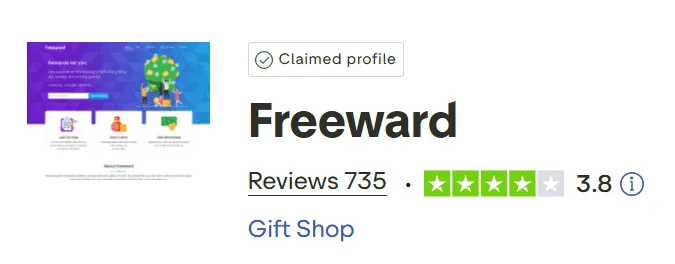
As of January 2026, Freeward has a 3.8/5 rating on Trustpilot with over 735 reviews — earning a “Great” badge.
The reviews show the typical split you’d expect from any GPT platform:
Positive experiences often come from users who:
- Follow the rules carefully
- Understand how offer tracking works
- Have patience with the review process
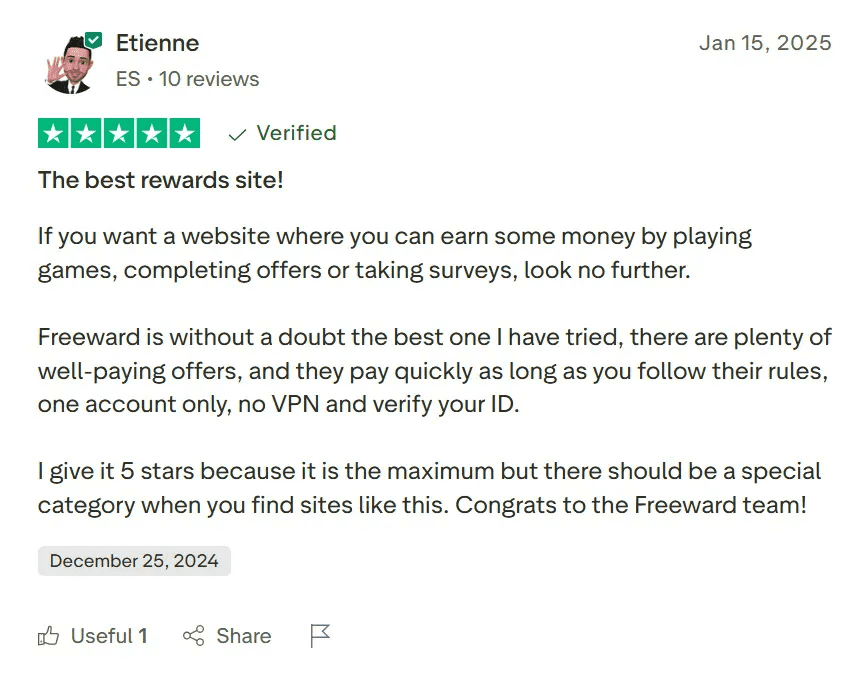
For example, Etienne from Spain (10 reviews on Trustpilot) gave 5 stars in January 2025, calling it “the best rewards site” and noting that payouts come quickly “as long as you follow their rules, one account only, no VPN and verify your ID.”
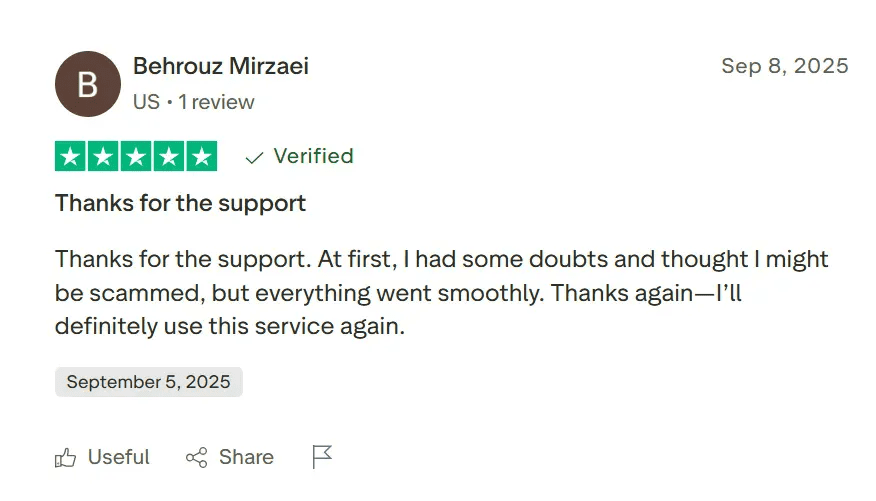
Behrouz from the US was initially skeptical, writing in September 2025: “At first, I had some doubts and thought I might be scammed, but everything went smoothly. Thanks again—I’ll definitely use this service again.”
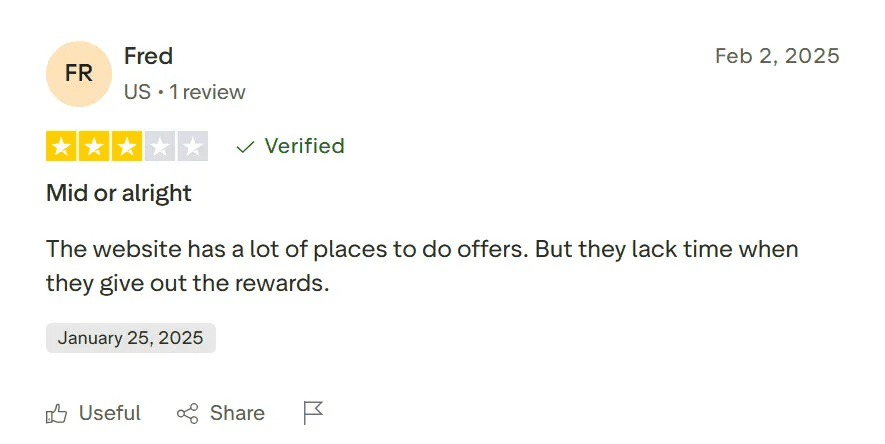
Fred’s 3-star review from February 2025 reflects this: “The website has a lot of places to do offers. But they lack time when they give out the rewards.”
Why Most Negative Reviews Happen
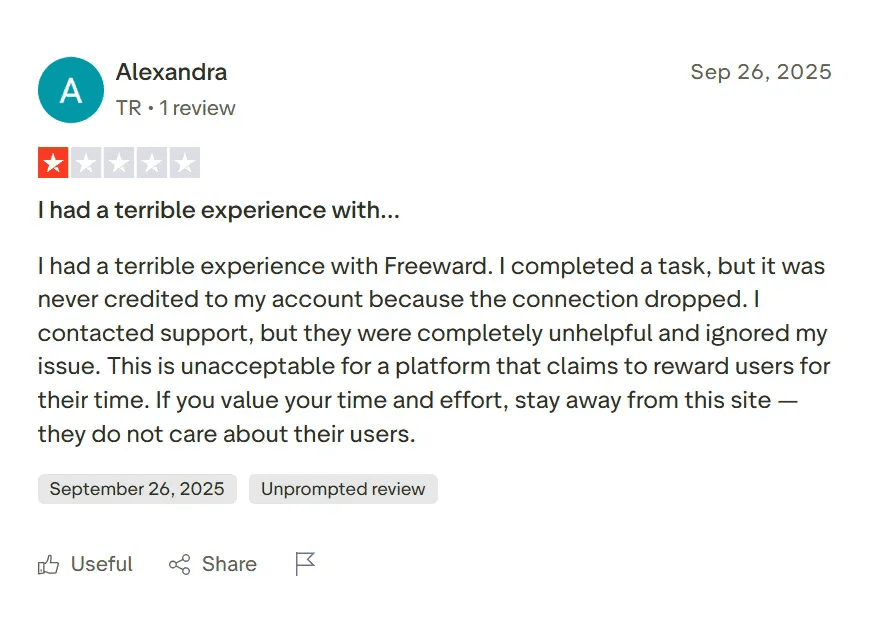
Alexandra from Turkey completed a task in September 2025, but her connection dropped and the offer never credited. Support couldn’t help.
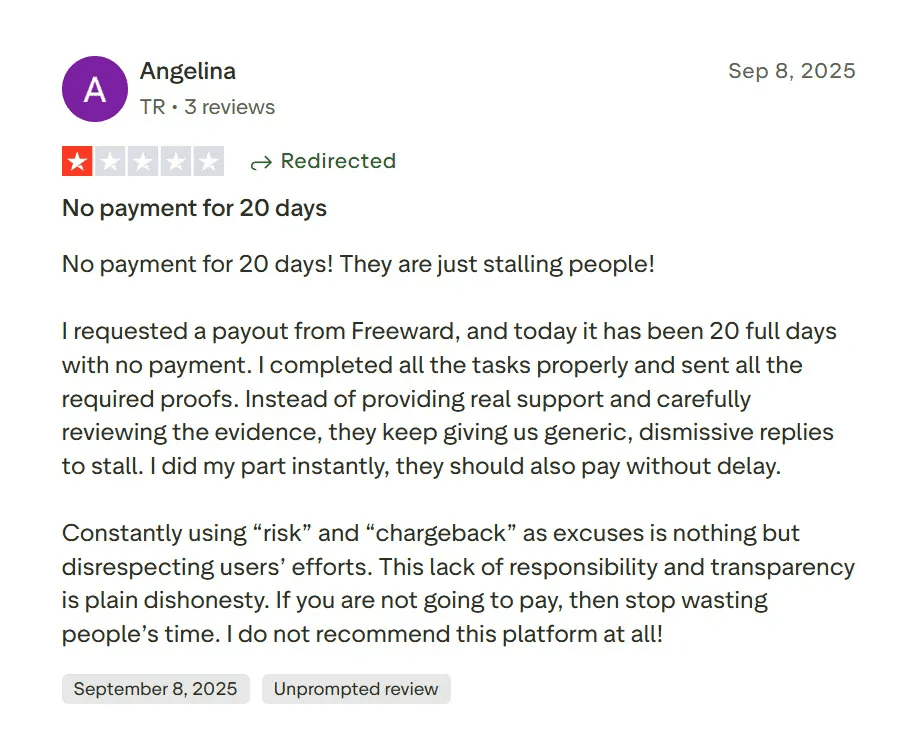
Angelina from Turkey waited 20 days for payment in September 2025, accusing Freeward of stalling and citing “risk” and “chargeback” excuses.
Most negative reviews fall into three categories:
1. ID Verification Resistance About 20% of new users are asked to verify their ID as part of fraud prevention. Some refuse and leave 1-star reviews. This is standard practice for payment platforms—not a scam tactic.
2. “On Hold” Payouts Sensitive offers require advertiser confirmation, which can take days or weeks. If you want to understand this deeply, read why cashouts get stuck (pending vs on hold).
3. Missing Coins & Tracking Issues Offers don’t credit due to broken tracking between users, ad networks, and advertisers. Connection drops, ad blockers, VPNs, or advertiser system errors can all break tracking—leaving users with no coins and no recourse.
Freeward can’t pay out what advertisers haven’t confirmed yet. The delays and tracking failures aren’t intentional—they’re technical limitations of advertiser-funded platforms.
If you need instant payouts, won’t verify your identity, or can’t tolerate tracking issues, you’ll likely have Angelina’s experience and leave frustrated.
🧠 What “Legit” Means in GPT Platforms
“Legit” doesn’t mean easy, fair, or guaranteed.
It means:
- Real advertisers
- Real tracking
- Real payouts
- Real rules
GPT platforms act as middlemen. Advertisers pay them when users complete valid actions (apps, surveys, trials). The platform keeps part of that payment and gives users a cut.
If:
- you follow the rules
- tracking works
- the advertiser approves
→ you get paid.
If not → you don’t.
If this system feels confusing, it helps to first understand how GPT reward platforms actually work.
⚙️ Why Freeward Is Legit (And Why That Still Upsets Some Users)
Freeward has been live since 2021 and processes withdrawals daily.
Key realities:
- $1 minimum cashout for popular rewards
- Most withdrawals clear in a few hours
- Around 10% of requests go On Hold for review
Holds happen when fraud systems detect risk signals:
- VPN or proxy usage
- Multiple accounts per household
- Tracking manipulation
- Sensitive offers needing advertiser confirmation
This is annoying — but normal for real GPT platforms.
Strict rules aren’t a scam sign.
They’re how advertiser-funded platforms survive.
🌍 Why User Experiences Are So Different
Freeward experiences vary for predictable reasons:
Location
US and Tier-1 countries get more offers and higher payouts. Tier-3 regions have fewer options.
Offer eligibility
Advertisers filter by demographics, history, and behavior.
User behavior
VPNs, multiple accounts, or repeating offers trigger fraud systems.
Expectations
People expecting fast income are unhappy. People treating this as spare-time rewards are usually fine.
This is why one user cashes out quickly while another gets blocked — it’s not random.
🚫 Who Should NOT Use Freeward
Freeward is not for you if:
- You need guaranteed or predictable income
- You won’t disable VPNs or privacy relays
- You expect disputes to be negotiable
- You’re in a low-offer region but expect US-level earnings
- You hate rule-based systems
This isn’t a judgment. It’s a fit check.
🎯 Is Freeward Worth Your Time?
Good fit if:
- You’re in a high-offer country
- You’re okay earning small amounts casually
- You read instructions carefully
- You understand time ↔ reward trade-offs
Bad fit if:
- You need fast money
- You skip offer terms
- You panic if a payout takes a few hours
- You expect support to override advertiser decisions
🧾The Bottom Line
Freeward is legitimate and has been paying users since 2021, with over 600K members globally.
Being legitimate doesn’t mean being frictionless.
This is a real platform with real rules, occasional delays, and an advertiser-funded model. If you go in understanding that — and accept the limits — it’s a straightforward way to earn a bit extra.
But if you expect it to be something it’s not, you’ll likely feel frustrated. That’s just the nature of this space.